
Employee Location Tracking in Buildings: Eligibility, Implementation, and Where to Get Help
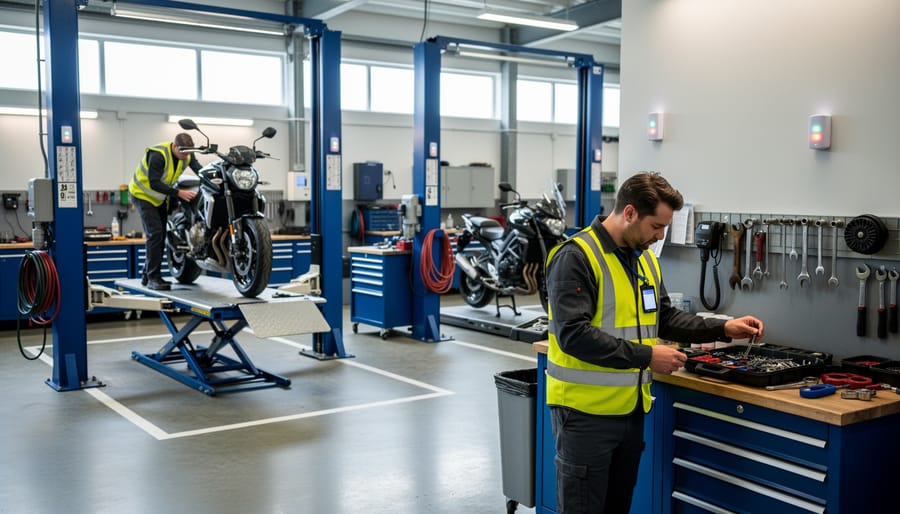
Employee location tracking in your building is legal in most jurisdictions when you have legitimate business reasons and follow proper consent and privacy protocols. The technology ranges from badge-based systems to real-time GPS and Bluetooth beacons, and implementation typically takes two to six weeks once you’ve established clear policies, obtained employee consent, and selected appropriate hardware. Most shops and facilities adopt it for safety, efficiency, or security purposes, but the legal framework requires you to balance operational needs against privacy rights.
If you run a motorcycle service center, custom shop, or dealership with multiple bays and zones, you already know how quickly things can get chaotic. A tech might be pulling a motor in bay three while another installer is upstairs fitting custom fairings, and when a client calls asking about their bike’s status, you’re stuck playing phone tag or walking the floor. Location tracking solves that coordination problem, but it also opens questions about employee privacy, data security, and whether you’re crossing legal lines.
The difference between a compliant system and a liability comes down to transparency and purpose. You can track movement to improve workflow, respond to emergencies faster, or verify task completion. You cannot surveil washroom breaks, monitor off-duty movement, or collect data without clear notice. In 2026, privacy regulators across North America have tightened scrutiny on workplace surveillance, so getting the framework right from the start protects both your operation and your team’s trust.
This guide walks you through what these systems actually do, who can legally use them, the step-by-step implementation process, and the rights and obligations on both sides of the tracking equation. Whether you’re weighing options for a single-location shop or managing a multi-floor facility, you’ll know exactly what’s required to deploy location tracking the right way.
What Employee Location Tracking in Buildings Is
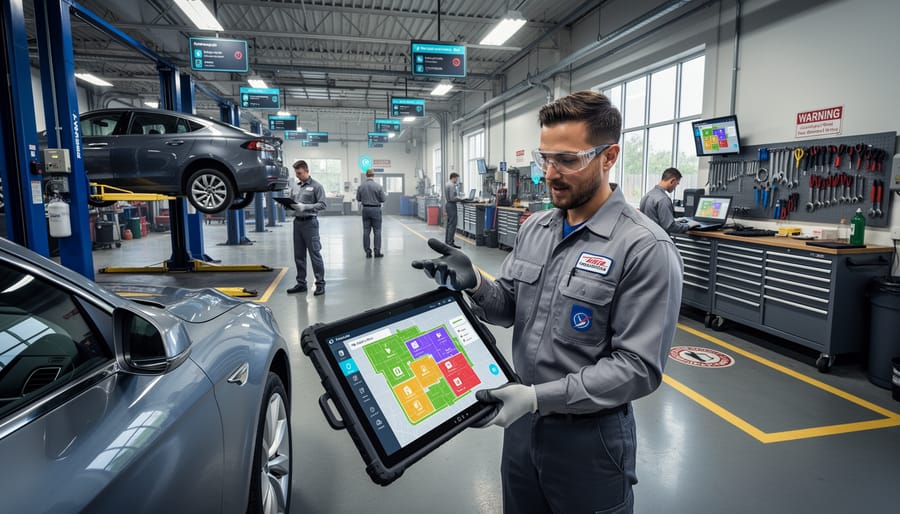
Employee location tracking in buildings uses digital systems to monitor where workers are within a facility in real-time. Think of it like a sophisticated version of a security badge that doesn’t just unlock doors, it continuously records which areas of your motorcycle service center a technician enters, how long they stay, and where they move next. These systems serve three critical purposes in automotive and motorcycle shops: protecting workers in hazardous areas (like paint booths or welding zones), optimizing workflow by tracking how long jobs take and where bottlenecks occur, and enabling rapid emergency response if someone needs help in a large facility.
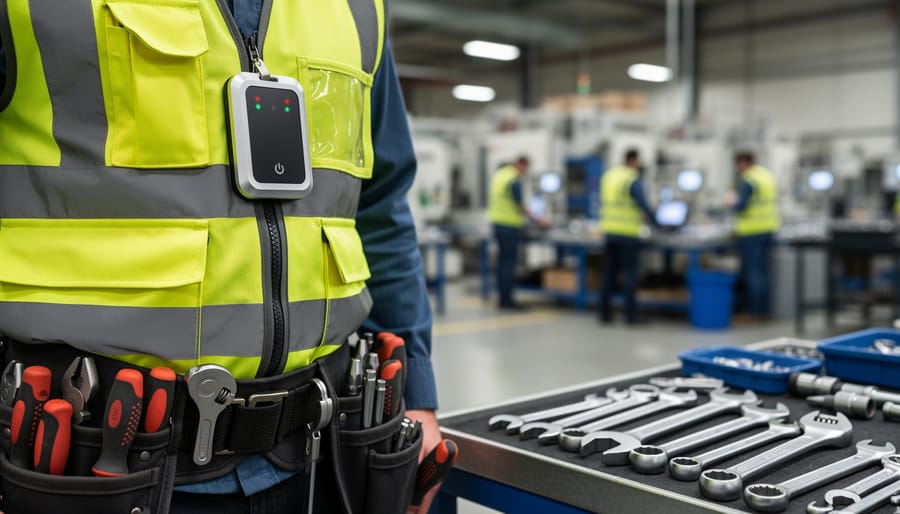
The technology options break down into four main categories. RFID systems use small tags worn on uniforms or helmets that ping fixed readers mounted throughout your shop, these work well for tracking movement between defined zones like the parts storage area, service bays, and customer waiting room. WiFi-based tracking leverages your existing wireless network to locate employees through their smartphones or dedicated badges, offering decent accuracy (typically within 3-5 meters) without additional hardware. GPS beacons provide precise positioning but usually only work outdoors or in facilities with specific receiver installations, making them less practical for enclosed service centers. Wearable devices, smart badges, wristbands, or clips, combine multiple technologies and often include panic buttons, making them popular in motorcycle shops where technicians work alone on lifts or under vehicles.
In practice, a motorcycle service center might use RFID to verify a technician entered the secure vehicle storage area when retrieving a customer’s bike, much like how a location identifier functions in vehicle registration systems. The system timestamps the entry, links it to the work order, and can alert supervisors if someone’s been in a hazardous zone beyond safe exposure limits. This creates an auditable record that protects both the business and the employee, while simultaneously capturing data that reveals which service bays get the most use or where technicians spend unexpected amounts of time, insights that drive better shop layout and staffing decisions.
Who Can Implement Location Tracking Systems: Eligibility and Requirements
Legal Eligibility and Privacy Compliance
In Canada, implementing employee location tracking requires strict adherence to the Personal Information Protection and Electronic Documents Act (PIPEDA), which governs how private sector organizations collect, use, and disclose personal information during commercial activities. Under PIPEDA, employers must obtain meaningful consent before tracking employee locations. This means employees need clear, understandable explanations of what data you’ll collect, how you’ll use it, how long you’ll keep it, and who might access it.
Ontario employers face additional provincial requirements. You must provide written notice before implementing any tracking system, detailing the technology’s capabilities and limitations. The consent must be informed and voluntary, employees need genuine understanding of what they’re agreeing to, not buried clauses in employment contracts.
Valid consent requires several elements. First, timing matters: you can’t implement tracking and seek consent afterward. Second, the purpose must be legitimate and clearly stated, “improving shop efficiency” works; “general monitoring” doesn’t. Third, employees retain the right to withdraw consent, though this might affect their eligibility for certain roles requiring tracked movement.
Your mandatory disclosure obligations include explaining data retention periods (typically tied to operational needs, not indefinite storage), who within your organization can access location data, whether third parties like insurance providers will see it, and how employees can request their tracking records. In unionized motorcycle shops, you’ll need to negotiate tracking implementation through collective bargaining before individual consent becomes relevant.
Industry-Specific Requirements for Automotive and Motorcycle Shops
Motorcycle and automotive service centers face unique tracking challenges that generic workplace systems don’t address. Your shop likely contains multiple zones with different safety and security requirements, and any location tracking system must account for these specialized environments.
Hazardous material storage areas require careful consideration. If your shop stores fuel, oils, solvents, or compressed gases, you need tracking systems that meet fire code requirements and don’t interfere with ventilation or safety equipment. Many municipalities in Ontario require documented personnel accountability in hazmat zones, making location tracking not just useful but potentially mandatory for compliance. Check with your local fire marshal before installing any electronic equipment in these areas.
Customer vehicle security zones present another layer of complexity. When you’re tracking employees who access customer motorcycles or cars, you’re simultaneously creating a security audit trail. This serves two purposes: it protects you against theft allegations and demonstrates to insurers that you maintain strict access controls. However, you must clearly define which staff members can be tracked in these zones and ensure your privacy disclosures explain how this tracking protects both customer property and employee accountability.
Unionized shops face additional requirements. If your service center operates under a collective agreement, you cannot implement location tracking without union consultation and likely formal negotiation. Many automotive sector unions in Ontario have negotiated specific language around electronic monitoring, and hazard awareness provisions may already exist in your agreement. Review your collective agreement’s management rights and employee monitoring clauses before proceeding, and expect the union to request impact bargaining if tracking represents a significant workplace change.
How to Implement Employee Location Tracking: Step-by-Step Process
Implementing employee location tracking in your motorcycle service center requires careful planning and transparent execution. Here’s the step-by-step process that respects both operational needs and employee rights.
Start with a needs assessment. Walk your shop floor and identify what you actually need to track. Are you trying to improve response times when customers arrive? Monitor who’s working in hazardous areas like the paint booth? Track tool movement between bays? Write down specific problems you’re solving, not vague goals like “increase efficiency.” A Toronto dealership we consulted discovered they only needed tracking in their parts warehouse and service bays, not the entire building, saving them thousands on unnecessary sensors.
Consult your employees before selecting any technology. Ontario privacy law doesn’t just recommend this; it strengthens your legal position. Hold a team meeting where you explain the specific problems, show examples of tracking systems, and genuinely listen to concerns. One mechanic might worry about bathroom monitoring (which you shouldn’t do anyway), while another might actually welcome tracking that proves they were working on a complex valve adjustment when a customer complains about wait times. Document these discussions. Understanding how location works in different tracking systems helps employees grasp what data you’re actually collecting versus what privacy fears imagine.
Select your vendor based on automotive-specific experience. Generic office tracking systems don’t account for metal structures that block signals, oil-covered hands that damage wearables, or the noise levels that make audio alerts useless. Request demos in your actual shop environment. Can the system distinguish between your service bays? Does it handle the concrete-and-steel construction typical of motorcycle shops? Will batteries survive the temperature swings in your building? Get written guarantees about data ownership, you don’t want a vendor claiming rights to your operational data.
Develop clear policies before installation. Draft a one-page document stating what you’re tracking, why, how long you’ll keep data, who can access it, and what you won’t monitor. Specify that tracking doesn’t apply during breaks, in washrooms, or after clock-out. Have a lawyer familiar with Ontario employment law review it. Distribute this policy and require written acknowledgment, not buried consent in an employee handbook update.
Install the system in phases. Start with one area, maybe the parts counter or a single service bay. Run it for two weeks while actively soliciting feedback. Technicians will quickly tell you if sensors are positioned wrong or if the system creates false alerts. Fix problems before expanding. A phased rollout also gives employees time to adjust without feeling suddenly surveilled across the entire workplace.
Train everyone on the system, including how they can access their own location data. Transparency reduces anxiety. Show employees the actual dashboard, demonstrate what supervisors see, and explain how data gets used. When your lead tech understands that tracking shows he averaged 47 minutes per brake job versus the 35 minutes he estimated, he gains useful feedback rather than feeling spied upon.
Monitor and adjust continuously. Review the data monthly for the first six months. Are you getting the safety improvements or efficiency gains you wanted? If not, modify the system or your processes, don’t just collect data forever without acting on it. Schedule quarterly check-ins with staff to address new concerns and recognize when tracking has legitimately helped, like quickly locating someone during that small oil fire last month.
Technology Options and System Comparison
Several tracking technologies suit motorcycle service centers, each with distinct advantages depending on your shop’s size, layout, and operational priorities. Understanding the practical trade-offs helps you choose a system that enhances efficiency without creating unnecessary friction or compromising workplace safety standards.
Bluetooth Beacon Systems offer the most straightforward shop floor tracking. Small battery-powered beacons mount throughout your service bays, parts storage, and customer waiting areas. Employees carry a badge or smartphone that pings nearby beacons, creating a real-time location map. For a typical three-bay motorcycle shop, you’d install 8-12 beacons to cover work zones, tool cribs, and entrances. Installation takes a weekend, and the system scales easily if you expand. The technology excels at zone-level tracking, knowing someone is in Bay 2 or the parts department, but won’t pinpoint their exact position within a 30-foot bay.
Wearable Badge Systems combine RFID or UWB (ultra-wideband) technology in employee ID cards. These provide more precise location data than Bluetooth beacons, accurate to within a few feet. This precision matters for larger facilities with multiple buildings, hazardous material zones, or high-value inventory areas where you need to verify who accessed specific locations. The badges are passive, no charging required, and integrate with existing access control systems. However, they require fixed readers throughout the facility, making initial installation more complex and expensive.
Mobile App-Based Solutions leverage employees’ smartphones with GPS and WiFi positioning. Download an app, clock in, and the phone tracks location during work hours. This approach has the lowest upfront cost and works immediately without installing hardware. The downside: accuracy indoors can be inconsistent, and you’re dependent on employees carrying charged phones. Some technicians prefer leaving phones in lockers while working on bikes, which defeats the system. This option suits smaller shops testing location tracking before committing to dedicated hardware.
| Technology Type | Best Use Case | Installation Complexity | Approximate Cost Range | Privacy Impact Level |
|---|---|---|---|---|
| Bluetooth Beacons | Small to mid-size shops, zone tracking | Low (DIY weekend install) | $2,000, $5,000 setup | Moderate (zone-level only) |
| Wearable RFID/UWB Badges | Multi-bay facilities, precise tracking needed | Moderate (professional install) | $8,000, $15,000 setup | Higher (precise positioning) |
| Mobile App (WiFi/GPS) | Single-location shops, budget-conscious | Very Low (software only) | $500, $1,500 annually | Highest (personal device) |
| Integrated Security Systems | Large dealerships, multiple buildings | High (enterprise deployment) | $20,000+ setup | Moderate (professional-grade) |
Integrated Security Systems combine location tracking with video surveillance, access control, and alarm monitoring. These enterprise solutions make sense for large motorcycle dealerships with showrooms, service departments, parts warehouses, and outdoor storage. The tracking component ties into your existing security infrastructure, correlating employee location with camera feeds and door access logs. Installation requires professional integrators and weeks of setup, but the result is a comprehensive view of facility activity that serves security, safety, and operational purposes simultaneously.
Consider your shop layout when selecting technology. Open-plan service bays with clear sightlines need less granular tracking than multi-story facilities with separated departments. A two-bay independent shop gains little from a $15,000 precision system, while a dealership service center with 20 technicians and high-value inventory justifies the investment for both theft prevention and efficiency gains.
Employee Rights and Employer Obligations
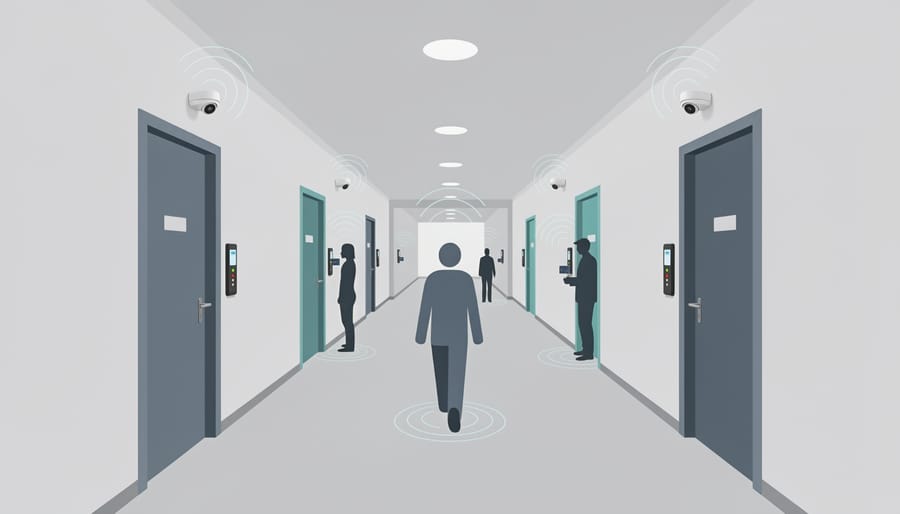
Employee location tracking creates specific obligations for employers and protections for employees that every motorcycle service center must understand before deployment. Canadian privacy law establishes clear boundaries that govern what’s allowed and what crosses the line.
Notice and Consent Requirements
Employers cannot implement tracking systems quietly. You must provide written notice to all employees before activating any location monitoring, explaining what data you’ll collect, how you’ll use it, how long you’ll keep it, and who can access it. This notice should arrive at least two weeks before system activation, giving staff time to review and ask questions. For service centers in a Toronto motorcycle hub where technicians handle high-value bikes, transparency builds trust that tracking serves legitimate security and efficiency purposes rather than surveillance for its own sake.
Consent forms must be separate from employment contracts and use plain language. Employees can’t be fired for refusing consent if tracking isn’t genuinely required for their role. If a technician’s job involves moving between service bays and parts storage for workflow efficiency, consent may be reasonable. If tracking extends to lunch breaks or personal time, it’s not.
Tracking Boundaries and Off-Limits Zones
Employers must disable tracking in designated private areas: washrooms, change rooms, break rooms, and any space marked for personal use. Your system should automatically suspend monitoring when employees enter these zones. Similarly, tracking outside work hours violates privacy rights unless employees are on call or using company vehicles for legitimate business purposes. A parts runner making deliveries during their shift can be tracked; that same employee driving home cannot be.
Data Access and Retention Rights
Employees can request their tracking data at any time. Employers must provide this information within 30 days, showing where the employee was tracked, when, and for what purpose. Retention periods should match legitimate business needs, typically 30 to 90 days for routine workflow data, longer only for incident investigations or legal requirements. When employees leave the company, their tracking data must be deleted within the specified retention period unless legal obligations require preservation.
Dispute Resolution Channels
If employees believe tracking violates their rights, they can file complaints with the Privacy Commissioner of Ontario, contact their union representative if applicable, or seek guidance from employment lawyers. Service centers should establish internal complaint procedures that don’t penalize employees for raising concerns. Document all tracking policy decisions and employee consultations, this record protects both parties if disputes arise.
Location Recognition and Industry Applications
Location tracking systems in motorcycle and automotive service centers do more than monitor staff movements, they connect directly to industry recognition and measurable business benefits. Many Canadian automotive trade associations now incorporate safety technology adoption into their operational excellence programs. Facilities demonstrating proper implementation of employee tracking for safety protocols, emergency response, and hazard zone management often qualify for tiered insurance discounts ranging from 5 to 15 percent on general liability coverage.
Industry certifications increasingly recognize businesses that use location data to verify technician compliance with safety procedures. When a shop can document that certified technicians were physically present in designated inspection zones during critical service tasks, it strengthens warranty claims and liability protection. Several motorcycle service centers serving local riders have reported that tracking data helped them achieve Canadian Automotive Service Information Standard compliance faster by proving technician access protocols.
Real-world applications extend beyond basic monitoring. Emergency evacuation systems integrate with tracking badges to provide instant headcounts and identify anyone remaining in hazardous areas during fire alarms or chemical spills. Customer vehicle security benefits significantly: when high-value motorcycles enter service bays, tracking confirms only authorized technicians accessed those areas, which matters for insurance claims if theft or damage occurs. Efficiency tracking reveals workflow bottlenecks without micromanaging, data showing technicians spending excessive time retrieving parts prompted one Toronto shop to reorganize its inventory layout, cutting service times by 12 minutes per job. These measurable improvements translate into competitive advantages when pursuing fleet service contracts or dealership partnerships that require documented operational standards.

Where to Get Help and Resources
Implementing location tracking in your motorcycle or automotive service center requires navigating multiple regulatory and technical considerations, and you don’t have to do it alone. Several official resources provide guidance, compliance support, and practical assistance tailored to Canadian businesses.
Start with the regulatory authorities that oversee workplace privacy and labor standards. The Office of the Privacy Commissioner of Canada administers PIPEDA and offers detailed guidance documents on employee monitoring and consent requirements. For Ontario-specific workplace regulations, the Ministry of Labour, Immigration, Training and Skills Development provides compliance resources and can answer questions about tracking systems in relation to occupational health and safety requirements. If you operate in multiple provinces, consult each provincial privacy commissioner’s office, as rules vary across jurisdictions.
Industry associations offer valuable peer support and sector-specific guidance:
– Motorcycle & Moped Industry Council (MMIC) provides member resources on operational best practices and can connect you with other shop owners who have implemented tracking systems
– Automotive Industries Association of Canada (AIA Canada) offers compliance toolkits and webinars on workplace technology adoption for automotive service businesses
– Canadian Federation of Independent Business (CFIB) provides legal hotlines and privacy compliance templates for small business members
– Provincial automotive trade associations offer localized guidance on labor relations and technology implementation in unionized shops
– Employment lawyers specializing in Canadian workplace privacy law can review your consent forms, data policies, and implementation plans
For technical implementation, reputable tracking system vendors typically provide compliance consultation as part of their service packages. They can explain how their technology aligns with Canadian privacy requirements and customize solutions for service center workflows.
Employee assistance programs and labor rights organizations, such as the Workers’ Action Centre, can help you understand employee perspectives and concerns, fostering a more collaborative implementation process. Consulting these resources proactively demonstrates good faith and reduces the likelihood of disputes down the road.
How to Apply or Complete the Process
Implementing employee location tracking doesn’t involve a formal “application” to government authorities, but you must complete specific compliance steps before activation. Start by documenting your business justification, whether it’s safety monitoring in hazardous shop areas, efficiency tracking for service bay optimization, or security for customer vehicle zones.
Next, draft a comprehensive privacy impact assessment that identifies what data you’ll collect, how long you’ll retain it, and who has access. This document becomes your compliance foundation if privacy complaints arise.
Schedule mandatory consultation sessions with affected employees at least 30 days before system launch. Present the technology, explain its purpose, and address concerns. Document all questions and your responses, this record demonstrates good-faith transparency.
Prepare written consent forms that specify tracking parameters: active hours, monitored zones, data usage, and opt-out consequences. Employees must sign before tracking begins.
Update your workplace privacy policy to reflect the new system, then post notices in tracked areas. Configure the system with privacy safeguards, geofencing to exclude washrooms and break rooms, automatic data deletion schedules, and access controls limiting who views location data.
Finally, designate a privacy officer responsible for handling employee data requests and system oversight.
Common Questions About Workplace Location Tracking
Employers considering location tracking and employees concerned about workplace privacy both share predictable questions. Below are answers to the issues that come up most often when motorcycle and automotive service centers evaluate these systems.
Can my employer track me during breaks?
No. Canadian privacy law requires employers to limit tracking to work activities during paid hours. Break rooms, lunch areas, and washrooms must be designated as non-tracking zones, and systems should automatically pause when employees clock out for breaks.
What happens to my location data if I leave the company?
Employers must delete or anonymize your tracking data within a reasonable period after termination, typically 30 to 90 days unless specific regulatory requirements demand longer retention. You have the right to request confirmation of deletion.
Do customers need to know about tracking systems?
Only if customer areas overlap with tracking zones. Post clear signage at entrances if your system covers showroom floors or waiting areas where customers might be detected, and ensure your privacy policy addresses incidental data collection.
How much does implementation cost for a small shop?
A basic beacon system for a shop with five to ten technicians typically runs between $2,000 and $5,000 for hardware, plus $50 to $150 monthly for software and support. Larger facilities with more sophisticated requirements can expect $10,000 to $25,000 in initial costs.
Beyond the FAQ staples, shop owners often ask whether tracking affects insurance premiums. Some commercial insurers offer modest discounts for verified safety systems, though the primary benefit comes from reduced incident response times rather than direct premium reductions. Employees frequently worry about constant surveillance. Properly configured systems track presence in work zones, not continuous movement paths, which means the data shows “John was in the paint booth from 10:15 to 11:45,” not “John walked 247 steps and paused at the tool cabinet for 90 seconds.”
Another common question: can tracking be turned off temporarily? Yes, for maintenance, system updates, or emergency situations, but routine deactivation defeats the safety and efficiency purposes that justify the system’s existence. If your workforce requests frequent shutdowns, that signals a problem with implementation transparency or trust, not a technical issue. Address the root concern through better communication rather than toggling the system on and off.
Implementing employee location tracking in your motorcycle service center requires careful attention to both operational goals and privacy obligations. The technology offers genuine benefits, improved safety protocols, efficient workflow management, and enhanced security for customer vehicles, but these advantages must be balanced against your employees’ reasonable expectations of privacy and autonomy.
Canadian privacy law doesn’t prohibit workplace tracking, but it demands transparency, legitimate purpose, and proportionality. You cannot simply install a system and inform staff afterward. Meaningful consultation, clear policies, documented consent, and restricted data use are legal requirements, not optional courtesies.
For motorcycle and automotive shops considering this technology, the path forward is straightforward: identify specific operational needs rather than pursuing tracking for its own sake, engage employees early in the conversation, choose technology that collects only necessary location data, and establish clear boundaries about where and when tracking occurs.
The shops that implement location tracking successfully are those that treat it as a collaborative safety and efficiency tool rather than a surveillance mechanism. Approach implementation methodically, respect the compliance framework, and prioritize building trust with your team. When done properly, location tracking becomes a legitimate business asset that employees understand and accept.